
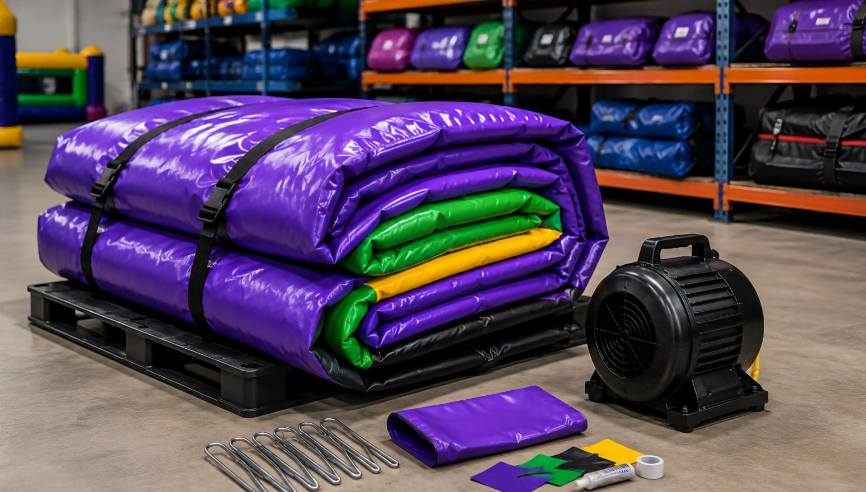
Owning a commercial bouncy castle doesn’t end when the last child climbs off.
In fact, what happens after an event often has a greater impact on the inflatable’s lifespan than the event itself.
Many owners assume that storage simply means folding the inflatable, loading it into a warehouse, and forgetting about it until the next booking. Unfortunately, that’s also how unnecessary repairs begin.
If you want your inflatable to stay cleaner, safer, and in service for as many years as possible, avoid these common storage mistakes.
Mistake #1: Packing It Away Before It’s Completely Dry
This is one of the quickest ways to shorten the life of an inflatable.
Moisture trapped inside folded PVC creates the perfect environment for mould, mildew, unpleasant odours, and gradual material deterioration. Even if the inflatable looks dry on the outside, water can remain hidden in seams and folds.
A better approach: If the inflatable gets wet during use or cleaning, allow it to dry completely before folding it for storage. A little patience today can prevent major repair costs later.
Mistake #2: Treating Storage as “Out of Sight, Out of Mind”
Some inflatables stay folded for weeks—or even months—without anyone checking on them.
During that time, small problems don’t disappear. A loose stitch, a tiny tear, or a damaged anchor point can easily become worse before the next event.
Why it matters: A five-minute inspection before storage is often enough to catch issues while they’re still inexpensive to repair.
Mistake #3: Choosing the Wrong Storage Environment
Not every storage space protects an inflatable equally well.
A damp shed, an overheated shipping container, or a warehouse with poor ventilation may slowly damage PVC, weaken stitching, and encourage mould growth.
The ideal storage area is cool, dry, clean, and protected from direct sunlight. Good ventilation is just as important as having enough space.
Mistake #4: Folding It the Same Way Every Time
Most people naturally develop a routine and repeat it after every rental.
While consistency is helpful, repeatedly folding along the exact same lines concentrates stress on the same sections of material year after year.
Changing the folding pattern occasionally helps spread wear more evenly across the inflatable and reduces long-term fatigue in high-pressure areas.
Mistake #5: Forgetting That Dirt Is Abrasive
An inflatable doesn’t have to look dirty to suffer damage.
Fine sand, dust, and tiny stones left inside the inflatable continue rubbing against the PVC surface every time it’s inflated and used. Over hundreds of rentals, that constant friction gradually wears away the protective coating.
Cleaning before storage isn’t simply about presentation—it’s part of protecting the material itself.
Mistake #6: Stacking Heavy Equipment on Top
Storage rooms are often busy places, and it’s tempting to place blowers, toolboxes, or other equipment wherever there’s space.
However, leaving heavy objects on top of a folded inflatable for long periods can compress seams, distort reinforced areas, and create unnecessary pressure points.
Keeping inflatables on dedicated shelving or separate storage pallets is a much safer long-term solution.
Mistake #7: Waiting Until the Next Booking to Open It Again
One of the biggest mistakes isn’t how an inflatable is stored—it’s forgetting about it completely.
Imagine discovering mould, missing accessories, or a damaged zipper on the morning of an important rental. By then, your options are limited.
Experienced operators often inspect stored inflatables periodically, even during quieter seasons. A quick check today can prevent cancelled bookings tomorrow.
What Professional Operators Do Differently
Experienced rental companies don’t rely on luck to keep their equipment in good condition.
Instead, they build simple storage routines into every rental cycle:
- Clean the inflatable before packing it away.
- Make sure it’s completely dry.
- Perform a quick visual inspection.
- Store it in a clean, ventilated environment.
- Check it again before the next booking.
None of these steps take long, but together they can significantly reduce wear and extend the working life of commercial inflatables.
Consistency Matters More Than Perfection
There’s no perfect way to store a bouncy castle.
What makes the biggest difference is following the same good habits after every event.
When storage becomes part of your regular maintenance routine—not just something you think about when problems appear—your inflatable is more likely to stay cleaner, last longer, and require fewer repairs throughout its service life.