
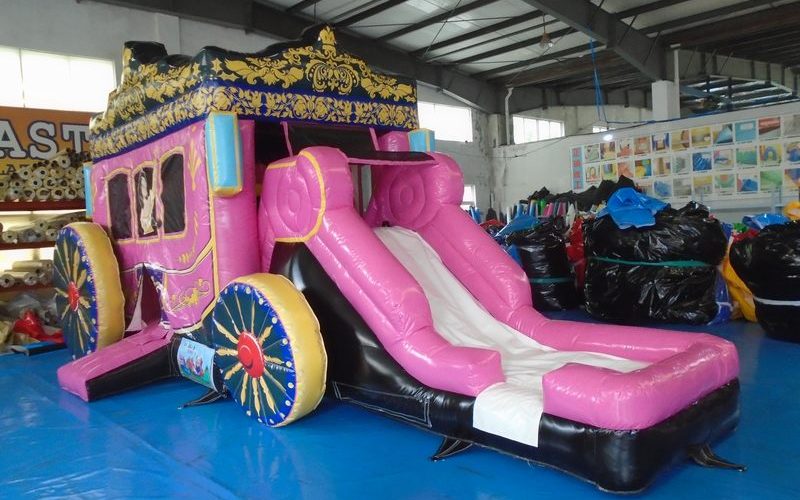
One of the most common questions we receive from parents and event planners in the Greater Toronto Area (GTA) is: “Does a bouncy castle have to go on real grass?” Whether you have a pristine artificial lawn in North York or a spacious concrete driveway in Mississauga, the answer is yes—you can absolutely set up an inflatable on these surfaces. However, the setup process and safety requirements change significantly depending on the ground type. Here is everything you need to know about safe installation on non-grass surfaces to ensure your Ontario backyard party remains secure and fun.
1. Setting Up on Artificial Grass (Turf)
Artificial grass is becoming increasingly popular in modern Canadian backyards. The good news is that it provides a flat, clean surface for inflatables.
- The Challenge: Unlike natural soil, you cannot always drive 38cm metal stakes through artificial turf without damaging the underlying weed barrier or drainage system.
- The Solution: If the homeowner allows it, small incisions can be made to drive stakes into the ground, which are then hidden by the turf fibers later. If not, certified sandbags are the mandatory alternative.
- Pro Tip: Always place a heavy-duty tarp under the unit. Even though artificial grass feels soft, the constant friction of the PVC against the turf can cause minor abrasions over several hours of jumping.
2. Setting Up on Concrete or Asphalt
Driveways and parking lots are excellent for community events or street parties in Toronto, but they offer zero natural anchorage.
- The Safety Standard: Since you cannot use stakes, you must use professional-grade sandbags. According to safety guidelines in Ontario, each anchor point must be secured with a specific amount of weight (often exceeding 100 lbs per point) to ensure stability against sudden wind gusts.
- Material Protection: Concrete is abrasive. To protect the high-quality 0.55mm PVC of a commercial inflatable, a thick ground cloth or “underlay” is mandatory. This prevents the bottom of the castle from wearing down or developing pinhole leaks during the event.
3. What Surfaces Should You Avoid?
While most flat surfaces are fine, there are a few “red flags” for any inflatable setup in your backyard:
- Gravel and Sharp Rocks: These are the enemies of PVC. Even with a tarp, sharp stones can puncture the unit under the weight of jumping children.
- Significant Slopes: Never set up on a hill. A slope greater than 5% can cause the inflatable to become unstable, leading to children sliding into one corner and potentially tipping the unit.
- Under Low-Hanging Branches or Power Lines: Always look up! Friction against tree branches can tear the roof of the castle, and power lines pose a severe electrical hazard.
4. The Importance of Professional Anchoring in Canada
Regardless of the surface, safety standards across Canada require every unit to be anchored at all points. On grass, we use heavy-duty steel stakes; on hard surfaces like concrete, we utilize professional weight bags to ensure the center of gravity remains low.
Never simply “tie it to a fence” or a parked car. Proper weighting prevents the unit from shifting during use—an essential precaution given the unpredictable weather we often see in the GTA.
Conclusion: Plan Your Space with Confidence
If you are unsure if your backyard is suitable, the best step is to measure your space and check the surface. As long as the area is flat, clear of debris, and has access to a power source, a professional setup can make it work—whether it’s on a lush green lawn or a suburban driveway.